
Suncare / Sunburn
Sunburn isn't just redness — it's inflammation caused by DNA damage.
How Does Sunburn Actually Happen?
UVB rays strike your skin and create pyrimidine dimers and oxidative lesions, prompting the body to launch a repair response: blood flow increases, immune cells rush in, and you get the classic heat, swelling, and sensitivity (Verywell Health; PMC, 2010). Even mild burns contribute to collagen degradation and long-term aging, whether or not you peel.
That damage isn't just cosmetic. Every burn — no matter how small — can accelerate photoaging, trigger hyperpigmentation, and increase your lifetime risk of skin cancer. Fortunately, research-backed protection methods can make a measurable difference.
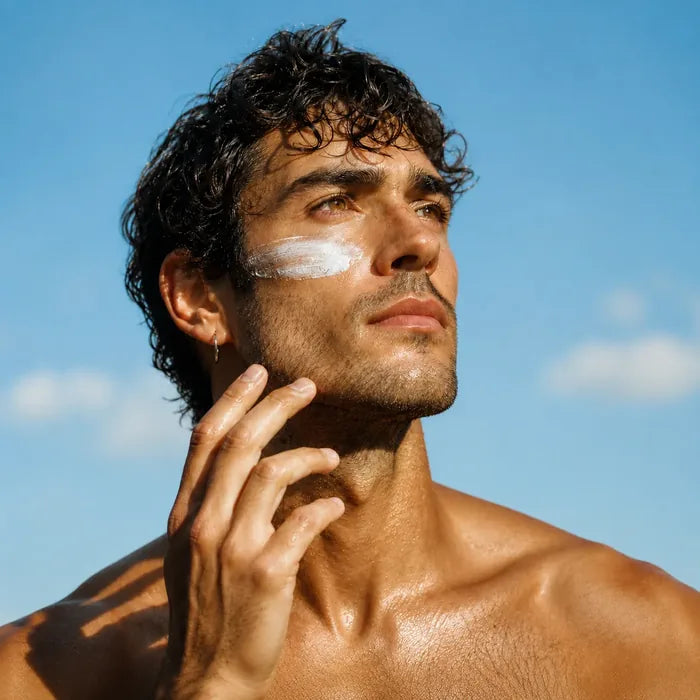
Use Sunscreen the Smart Way
Dermatologists and FDA guidelines recommend broad-spectrum SPF 30 or higher, applied generously and often (FDA, 2023). Here's how to make it count:
- Apply it 15–30 minutes before sun exposure. This gives it time to bind to your skin and form a stable protective layer (PubMed, 1996).
- Use enough. About one ounce (a shot glass full) for your body and a nickel-sized amount for your face.
- Reapply every two hours. Especially if you're swimming, sweating, or toweling off.
- Don't forget common miss zones. Ears, lips, backs of hands, tops of feet, and your hairline all need attention.
No matter how good your sunscreen is, it won't protect you from everything.
Think Beyond SPF
That's why most dermatologists recommend a layered approach — small daily behaviors that lower your total UV exposure without much effort. Choosing dark or tightly woven clothing, especially pieces with UPF ratings, helps block rays that fabric usually lets through. Opting for shade in the middle of the day, when UV peaks between 10 AM and 4 PM, reduces your skin's burden. Even adjusting the timing of your walks, workouts, or outdoor errands limits how much UV you take in. None of these replace sunscreen — but together, they make it work harder for you.
Support Your Skin With Antioxidants
The oxidative damage caused by UV exposure doesn't stop when you go back indoors. In fact, sun damage continues for hours due to reactive oxygen species and lingering inflammation (Verywell Health, 2023). Antioxidants can help counter this process:
- Topical vitamin C and E help defend the upper layers of the skin and support collagen.
- Oral antioxidants — like carotenoids, polyphenols, and vitamin C — have been shown to increase UV resistance from within (PubMed, 2010).
- Soothing agents like aloe vera and cool compresses can calm redness and irritation in the short term.
That's the thinking behind REYS — a daily suncare supplement that combines oral antioxidants like vitamin C, astaxanthin, and Polypodium leucotomos to support skin resilience from the inside out. It complements sunscreen and shade; it doesn't replace them.*
The Bottom Line
Sunburn prevention is less about single products and more about patterns. With sunscreen, lifestyle adjustments, and recovery steps working together, you create a routine that protects both short-term comfort and long-term skin health.
Getting red after short sun exposure? It might be more than a burn — read about sun allergies next.
References
- Verywell Health. "What Actually Happens When You Get a Sunburn." 2023.
- U.S. Food and Drug Administration (FDA). "Sunscreen: How to Help Protect Your Skin." 2023.
- PubMed (1996). "Photoprotection by topical vitamin C, E, and melatonin: a review."
- Centers for Disease Control and Prevention (CDC). "Sun Safety." 2023.
- PubMed (2010). "Oxidative stress and skin aging: Mechanisms and protective strategies."
*These statements have not been evaluated by the FDA. This product is not intended to diagnose, treat, cure, or prevent any disease.